Criminal Defense AI Search Strategy: How to Capture Urgent, High-Stakes Queries

Criminal Defense AI Search Strategy: How to Capture Urgent, High-Stakes Queries

Someone just got arrested at 2 AM. Their family opens ChatGPT and types “what to do after DUI arrest.” The AI recommends three criminal defense attorneys. Specific names. Specific practices.

Is yours one of them?

Criminal defense generates some of the most urgent, high-stakes queries across AI platforms, making a strong criminal defense AI search strategy essential. Importantly, iLawyer Marketing research indicates that 85 percent of potential law firm clients said that they used Google as their main research portal when finding an attorney. Couple that number that with the fact that 78 percent of legal searches trigger AI overviews, and it becomes clear that your firm needs to show up in the AI overviews to stay competitive.

AI search for criminal defense attorneys treats crisis-driven legal research differently, people aren’t casually browsing; they’re panic-searching and need emergency criminal defense lawyer guidance.

Overview Summary


Criminal defense generates urgent, crisis-driven AI queries, often when resources are unavailable. AI platforms prioritize immediate-action content, constitutional rights clarity, 24/7 availability indicators, and charge-specific expertise. Five signals separate practices appearing in midnight arrest searches from invisible competitors.

Why Do Criminal Defense Attorneys Need an AI Search Strategy?

Time-sensitive criminal queries trigger different algorithmic responses than scheduled civil matters. When someone searches “arrested for DWI what are my rights,” they’re in crisis mode. AI platforms recognize urgency markers: question phrasing, time stamps, follow-up query patterns. The systems prioritize immediate, actionable guidance over comprehensive legal analysis.

Here’s what separates criminal defense from other practice areas in criminal defense answer engine optimization (AEO): prospects query AI platforms about arrests, charges, constitutional rights, and court procedures, all while under extreme stress and time pressure.

5 Urgency Signals AI Platforms Look for in Criminal Defense Searches

Across the criminal defense firms we’ve helped optimize for AI visibility, five patterns consistently distinguish practices appearing in AI-generated recommendations from those that don’t.

Signal 1: Immediate-Action Content

Content structured around time-critical decisions. “Steps within 24 hours of arrest.” Direct procedural guidance in first 40 words. AI search visibility for law firms prioritizes this type of crisis-response legal content.

Signal 2: Constitutional Rights Clarity

Specific amendments, Miranda warnings, search protections with jurisdictional precision. This specificity signals expertise to both AI search algorithms and prospects in crisis.

Signal 3: Crisis-Response Formatting

Questions mirror panic searches. Short sentences. Clear action steps. No jargon obscuring guidance. This matches how prospects phrase urgent queries to ChatGPT, Perplexity, and Claude.

Signal 4: Availability Indicators

24/7 contact options. Emergency consultation availability. Immediate response protocols displayed prominently. AI platforms parse for accessibility markers in urgent criminal defense queries.

Signal 5: Charge-Specific Expertise

Detailed breakdowns by charge—DUI, drug offenses, assault—each with jurisdiction-specific procedures and penalties. Specialized practice area content performs significantly better in AI recommendations for criminal lawyers.

Practices appearing in urgent queries possess all five signals. Building this crisis-optimized architecture requires legal content marketing expertise that understands both algorithmic priorities and the urgent questions prospects actually ask during criminal emergencies.

Generic vs. Crisis-Optimized: A Quick Comparison

Before: “Our firm handles DUI cases. We have experienced attorneys who can help. Contact us for a consultation.”

After: “Arrested for DUI in Texas? Under Texas’s implied consent law (Transportation Code § 724.011), refusing a breath or blood test triggers an automatic 180-day license suspension—and your refusal can be used against you in court. Your ALR hearing request deadline is 15 days from arrest, not from conviction. Here’s what to do in the next 24 hours: [steps]. Call our 24/7 defense line now.”

The second version hits all five signals: immediate-action framing, constitutional specificity, crisis formatting, availability indicator, and charge-specific detail. That’s what AI platforms cite.

How AI Search Platforms Rank Emergency Criminal Defense Queries

Criminal defense differs fundamentally from scheduled legal services. 

Criminal defense queries are inherently unplanned. AI platforms recognize this through urgency markers in query language and follow-up search patterns. When someone searches ‘just arrested for DUI what happens next,’ AI systems are more likely to prioritize firms demonstrating immediate availability over those presenting standard business-hours operations.

They prioritize emergency criminal defense lawyer availability, crisis response capability, and immediacy. Non–urgent queries emphasize comprehensive expertise and case results, while criminal defense AI search strategy prioritizes accessibility and urgent guidance.

Crisis-Optimized Strategies for Criminal Defense AI Search Visibility

Let’s examine specific approaches that work.

Approach 1: 24/7 Visibility Architecture

Emergency contact integration prominently displayed. Not hidden footers—immediate availability shown clearly in the first screen view. AI platforms parse these markers when recommending attorneys for midnight arrest legal help searches.

Approach 2: Rights-First Content

Publications opening with constitutional protections before services. “Your Fourth Amendment rights during [State] traffic stops” before practice promotion. This builds algorithmic trust signals valued in AI search for criminal defense attorneys.

Approach 3: Charge-Specific Resources

Separate comprehensive materials for each charge. DUI gets dedicated coverage: field sobriety procedures, breathalyzer protocols, license timelines. Drug possession receives its own content: warrant requirements, suppression grounds, diversion eligibility. This topical authority signals deep expertise to AI systems.

Approach 4: Citation Integration

Every procedural explanation references specific statutes, constitutional provisions, and relevant case law. “Under [State] v. [Case], evidence obtained through [procedure] is inadmissible when [circumstances].” This level of specificity dramatically improves AI content strategy for attorneys and increases citation rates.

Approach 5: Urgent-Query Monitoring

Regular assessment of arrest-related questions prospects ask AI platforms. Track patterns. Monitor recommended practices. Identify gaps and opportunities to optimize criminal defense content strategy.

Implementing these approaches simultaneously creates comprehensive crisis-query visibility. However, criminal defense attorneys focused on casework often lack bandwidth for systematic content development. Specialized content marketing for attorneys ensures consistent, compliant crisis-response architecture while you focus on defending clients.

Frequently Asked Questions

Do AI search engines really recommend specific criminal defense attorneys?

Yes. When users ask urgent legal questions, AI platforms often cite specific attorneys or firms in AI recommendations for criminal lawyers, highlighting expertise, relevance, and crisis-readiness.

Can criminal defense practices actually optimize for AI searches?

Yes. Content written by experts answering urgent questions about charges, rights, and procedures improves AI search visibility for law firms and ensures your practice appears in urgent criminal defense queries.

What’s the difference between optimizing for Google versus AI platforms?

Traditional SEO ranks webpages. Criminal defense answer engine optimization aims for citation within AI responses, requiring authoritative, structured, actionable content that directly answers crisis-driven criminal defense questions in a clear question-and-answer format.


How quickly does criminal defense AI search optimization show results?

Most firms see initial AI visibility improvements within 60 to 90 days of publishing crisis-optimized content. However, building consistent citation authority across ChatGPT, Perplexity, and Google AI Overviews typically takes four to six months of sustained content development. Criminal defense benefits from faster traction than civil practice areas because urgent queries have less competition from comprehensive long-form content.

Can AI search optimization conflict with attorney advertising ethics rules?

Content optimized for AI citation focuses on educational, rights-based information rather than promotional claims, which generally aligns well with state bar advertising rules. However, firms should ensure AI-optimized content avoids guarantees of outcomes, misleading specialization claims, or testimonials that violate their jurisdiction’s rules of professional conduct. An attorney-reviewed content process addresses this.

What criminal defense queries generate the most AI citations?

Rights-based and procedural questions consistently outperform general queries. Searches like “what are my rights after a DUI arrest in [State]” or “can police search my car without a warrant” trigger AI responses that cite specific attorneys far more often than broad queries like “best criminal defense lawyer near me.” Optimizing for these specific constitutional and procedural questions yields higher citation rates.

Should criminal defense firms create separate content for each charge type?

Absolutely. AI systems treat DUI, drug possession, assault, and white-collar charges as distinct topic clusters. A single “criminal defense” page covering everything signals generalist knowledge rather than deep expertise. Dedicated content per charge type with jurisdiction-specific procedures, penalties, and defense strategies dramatically improves your firm’s authority signals for charge-specific AI queries.

Capture Urgent Criminal Defense Searches with AI

Criminal defense prospects search during crises, not business hours. Midnight arrests, 2 AM DUI stops, late-night charge notifications. AI platforms prioritize firms showing crisis-response legal content and immediate guidance, rewarding practices built for urgency recognition as part of a criminal defense AI search strategy.

Creating comprehensive crisis-response content builds long-term authority so prospects trust your constitutional knowledge before reaching out.

Contact us online or call 877-486-8123 to implement a criminal defense AI search strategy, ensuring your practice appears in AI-generated answers across ChatGPT, Perplexity, Claude, and Google AI Overviews.

Overview Summary


  • Criminal defense queries often spike at night or on the weekend when traditional legal resources are unavailable
  • AI platforms recognize crisis patterns through urgent language and time-of-day markers, prioritizing emergency availability over business hours
  • Immediate-action content wins with steps within 24 hours and direct guidance in first 40 words
  • Constitutional rights clarity signals expertise through specific amendments, Miranda warnings, and jurisdictional precision AI verifies
  • 24/7 availability must display prominently in first screen view—AI parses accessibility when recommending midnight arrest help
  • Charge-specific expertise performs better: dedicated DUI, drug possession, and assault content separated by charge type
  • Crisis-optimized strategy requires rights-first content and constitutional citations that civil practice SEO completely misses
David Arato, JDs headshot

David Arato, JD, is the founder of Lexicon Legal Content, an attorney-owned legal content marketing agency serving law firms since 2012. A graduate of Saint Louis University School of Law, David has spent over 13 years helping criminal defense firms build practice area pages that drive client acquisition—from DUI/DWI defense to drug offenses to violent crime charges.

David’s work focuses on the intersection of legal expertise and AI visibility—ensuring criminal defense content meets both Google’s E-E-A-T standards and the emerging requirements of AI search systems like ChatGPT, Perplexity, and Google AI Overviews. His team of JD-credentialed writers produces attorney-reviewed criminal defense content structured for AI citation, with particular emphasis on crisis-driven search visibility and urgent-query optimization.

A frequent contributor to Attorney at Law Magazine and Attorney at Work, David regularly shares insights on legal content marketing and AI search optimization. He’s also a recurring guest on legal marketing podcasts, discussing how criminal defense firms can adapt their content strategies for the AI-driven search landscape.
How to Get Your Law Firm Featured in Google AI Overviews (and ChatGPT Results)

Your potential clients are asking AI tools about their legal problems right now. And those AI tools are deciding which law firms to recommend.

Google’s AI Overviews appear at the top of search results. ChatGPT now has search capabilities. Perplexity answers legal questions with sourced recommendations. If your law firm in ChatGPT isn’t appearing in these generative AI results, you could be invisible to the next generation of client searches.

Here’s the thing: getting featured in AI-powered search isn’t about gaming algorithms. It’s about creating content that AI systems recognize as genuinely authoritative, which is exactly the content real humans want to read anyway.

Welcome to AIO (AI Optimization). The best strategy is straightforward: create better content for actual people. At Lexicon Legal Content, this is what we’ve advocated all along.

Quick Summary


This article explains why many law firms are invisible in AI search results and how to get featured in Google AI Overviews and ChatGPT. Key strategies include creating authoritative content, structured attorney bios, E-E-A-T signals, schema markup, and deep, practice-area coverage.

What Are AI Overviews and Why They Matter

AI Overviews are Google’s generative answers that appear at the top of search results. Instead of showing links, Google’s AI synthesizes information from multiple sources and presents a comprehensive answer with citations.

ChatGPT, Perplexity, and similar platforms are doing the same thing. They’re fundamentally changing how people research legal issues and decide which law firm in ChatGPT to contact.

Traditional search showed ten blue links. Generative AI reads sources for you, synthesizes information, and presents answers, with attribution to authoritative sources it trusts.

For legal queries, AI tools are now the intermediary between your content and potential clients. The AI decides whether your firm is authoritative enough to cite or recommend.

When someone searches “how to file for divorce in [your state],” AI Overviews increasingly provide the first answer they see. If your content is featured, you’re positioned as an authority before anyone clicks. If not, you’re competing for attention below the AI Overview, and users often don’t scroll past it.

How AI Overviews Actually Work

AI systems don’t just match keywords. They understand concepts, evaluate authority, and assess whether content genuinely answers questions.

Google’s AI scans content across the web, identifies authoritative sources for specific queries, synthesizes information, and presents answers. It prioritizes content demonstrating expertise, authority, and trustworthiness, the E-E-A-T factors Google has emphasized for years.

For legal content, AI looks for signals you’re a real attorney with real expertise: proper credentials, consistent entity information, and content showing genuine depth of knowledge rather than generic advice.

Think authority matching, not keyword matching. The AI asks: “Who should I trust to answer this legal question?”

6 Strategies to Get Featured in AI Search Results

1. Build Your Law Firm as a Recognized Entity

AI systems need to understand your firm as a distinct, authoritative entity.

Claim and optimize your Google Business Profile completely. Implement structured data markup (LocalBusiness, LegalService, and Attorney schema types). Maintain consistent NAP information (Name, Address, Phone) everywhere online. Create detailed attorney bio pages establishing credentials, bar admissions, practice areas, and experience. AI systems scan these to verify expertise.

2. Create Genuinely Authoritative Content

Most firms create thin, generic content stuffed with keywords. AI sees through this.

Answer questions completely. If someone searches “how long does probate take,” don’t just say “it varies.” Explain specific factors in your jurisdiction, typical timelines, and what causes delays. Get specific. Generic advice doesn’t demonstrate expertise. Specific guidance showing real knowledge does.

Go deeper than competitors. If other firms have 300-word posts on a topic, your comprehensive 1,000-word guide is what AI recognizes as more authoritative.

3. Structure Content for AI Readability

Use descriptive headings that directly state what each section covers. Answer questions in the first sentence, don’t bury answers three paragraphs down. Create logical information hierarchy with H2s and H3s. Include FAQ sections addressing common questions directly. This is exactly what AI Overviews pull from.

4. Build Real Authority and Trust Signals

Earn backlinks from legitimate legal sources, state bar associations, legal publications, respected local news. These signal far more authority than directory listings. Showcase attorney credentials prominently. Display authentic client reviews. Highlight professional affiliations and recognition. You can’t fake authority to AI systems. They identify genuine expertise and filter out manufactured credibility.

5. Focus on Topics Where You Have Real Expertise

Being the best source on a specific topic beats being mediocre on many topics. Develop deep content around your specific practice areas. Build local authority, AI factors in geographic relevance. Create content series that comprehensively cover subjects.

Good news for small firms: you don’t need to compete on volume. You need genuine expertise in your niche.

6. Answer Questions Like Your Clients Ask Them

Longer queries trigger AI Overviews 60% of the time versus 20% for short keywords. Clients type full questions: “My landlord won’t fix my heater, what are my rights in California?” Answer directly in the first 40-60 words. Use natural phrasing. Anticipate follow-up questions. When AI sees you answering complex legal questions conversationally, you become the trusted source.

How to Align Your Content With Real Client Conversations
Visibility

Google and ChatGPT don’t just match keywords anymore – they understand context and conversation. Statistics reveal that longer, natural language queries with four or more words trigger AI Overviews 60% of the time, while two-word searches only hit 20%. This isn’t a minor shift, it’s a complete change in how your firm needs to be discovered.

Your potential clients are having conversations with AI, not conducting database searches. They’re typing complete questions: “My landlord won’t fix my heater and it’s been two weeks – what are my rights in California?”

Create content that mirrors this conversational depth. Lead with direct answers in the first 40-60 words, use the exact phrasing clients use, and anticipate their follow-up questions. When AI systems see your firm consistently providing comprehensive answers to complex legal questions – not just targeting keywords – they begin recognizing you as the trusted source for how real people actually seek legal help.

What This Means for Your Content Strategy

If you’ve been churning out short blog posts optimized for keywords, AI Overviews change everything. Fewer pieces of genuinely comprehensive content beat lots of thin content. Content that helps people beats content designed to rank. Long-term authority building beats quick SEO wins.

Human expertise matters more than ever. AI-generated content from non-attorneys won’t cut it. AI search systems identify and prioritize genuine human expertise.

This is exactly the approach we take at Lexicon Legal Contentcreating authentically human content while satisfying the authority signals both AI systems and potential clients look for.

Frequently Asked Questions

Do I need to rewrite all my existing content?

No. Focus on optimizing your highest-value content first. Update thin or outdated content before creating new posts. AI evaluates your entire site’s authority, so improving existing content often has more impact.

How long does it take to appear as a law firm in ChatGPT results?

Expect months rather than weeks. AI systems need to recognize your content as authoritative, which requires building trust signals over time: quality backlinks, consistent entity information, and demonstrated expertise across multiple pieces.

Will AI Overviews replace traditional SEO?

No – they’re an evolution. Traditional ranking factors still matter because they signal authority to AI systems. The difference is AI systems better evaluate whether content is genuinely helpful versus keyword-optimized. Think of it as SEO with higher standards.

Can I use AI tools to create content?

Use AI strategically as an assistant, not as a replacement for human expertise. AI can help with research and outlining, but content needs genuine attorney expertise and authentic voice to be recognized as authoritative.

What’s the biggest mistake law firms make?

Trying to game the system with technical tricks instead of creating genuinely valuable content. AI systems filter out low-quality content dressed up with SEO tactics. Firms succeeding in AI Overviews create content demonstrating real expertise that genuinely helps people.

Get Your Law Firm Featured in Google AI Overviews

Getting featured in Google AI Overviews and ChatGPT results isn’t about learning new technical tricks. It’s about creating genuinely authoritative, actually helpful content authentically written by someone with real expertise.

The AI revolution makes content quality matter more, not less. Thin content and generic advice are what AI systems filter out. Comprehensive, expert-level content gets featured.

If you’ve been focused on quick SEO wins, now is the time to shift strategies. AI Overviews reward building real authority, creating genuinely helpful resources, and establishing your firm as a recognized expert.

This is what we help law firms do at Lexicon Legal Content – creating human-first content that both real people and AI systems recognize as valuable. Skip the AI-generated content and keyword stuffing. Create content reflecting your real expertise. That’s what gets featured in AI Overviews, converts potential clients, and builds a law firm brand that stands out in an AI-mediated search landscape.

Ready to get started? Call 877-486-8123 or contact us online today. Stand out as a recognized law firm in ChatGPT.

Key Takeaways


  • AI search prioritizes Experience, Expertise, Authoritativeness, and Trustworthiness (E-E-A-T).
  • Generic or thin content won’t rank; attorney-written analysis is required.
  • Detailed attorney bios and clear credentials help AI verify expertise.
  • Organize content into practice-area clusters for topical authority.
  • Use schema markup and consistent updates to boost AI visibility and trust.


About the Author

David Arato, JD, is co-founder of Lexicon Legal Content, an attorney-owned legal content marketing agency serving law firms since 2012. With his legal education and over a decade of experience, David helps law firms create authoritative content that AI systems recognize as trustworthy. Learn more at lexiconlegalcontent.com or call 877-486-8123.

EEAT for AI Search Law Firms: How to Get AI Citations

EEAT – another SEO acronym to decode. Another technology shift to adapt to. If you’re an attorney trying to keep up with EEAT for AI search while also, you know, practicing law, take a breath.

Here’s the thing: EEAT isn’t some arbitrary hoop to jump through. It’s Google’s way of identifying what you already have, real experience, genuine expertise, and hard-earned credibility. And with AI search transforming how potential clients find attorneys, demonstrating those qualities clearly has never been more important.

This guide translates EEAT principles into practical tactics for law firms navigating AI-powered search. You’ll learn what EEAT means in the AI era, why it matters for your firm’s visibility, and exactly what you can do about it today.

At Lexicon Legal Content, our attorney-led team has been creating high-quality legal content for 12 years. As AI search emerged, we immediately adapted our expertise to AIO and GEO optimization—and we know how to get your firm to the top of AI Overviews and search results.

If you need proof of our EEAT optimization expertise, look at our own results below – Lexicon Legal Content appears in Google AI Overviews for legal content marketing searches.

Alt tag: "Lexicon Legal Content appearing in Google AI Overview for legal content providers - demonstrating AIO for lawyers strategies in action

Read on to learn more….

Quick Summary


AI systems like ChatGPT, Claude, and Google’s AI Overviews prioritize content from verified attorneys over generic legal information, making EEAT optimization essential for law firm visibility in 2025.

What EEAT Means in the Age of AI Search

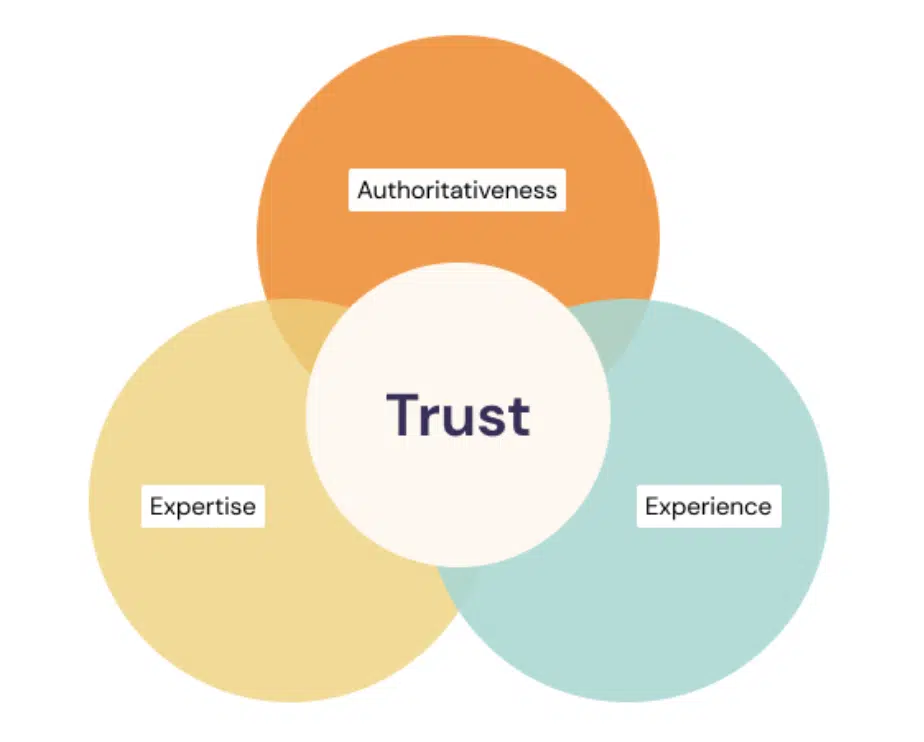
EEAT stands for Experience, Expertise, Authoritativeness, and Trustworthiness, the four quality signals Google uses to evaluate content. These principles come directly from Google’s Search Quality Guidelines, and they’re not new. But they matter exponentially more now that AI search engines are summarizing and surfacing content in AI Overviews and Search Generative Experiences.

When AI decides which content to feature, trust, and cite in its responses, it’s looking for clear signals that the content comes from someone who genuinely knows what they’re talking about, not just someone who knows their way around keywords.

The good news? You already have these qualities. The challenge is making them visible to AI search algorithms that are deciding whether to surface your content.

Why AI Search Changes the EEAT Game for Law Firms

Traditional Google search ranked web pages based on keywords, links, and user engagement. AI search optimization works differently.

When someone searches “what to do after a car accident” or “how long do I have to file a personal injury claim,” Google’s AI Overview often generates a summary response by synthesizing information from multiple sources. The AI doesn’t just match keywords, it evaluates whether sources demonstrate genuine expertise and trustworthiness.

AI search engines prioritize content from authors with clear credentials and demonstrated experience. Generic content from unattributed writers gets overlooked. Detailed, experience-based content from verified attorneys gets featured.

For law firms, this means your expertise signals, author bios, credentials, case experience, directly impact whether AI surfaces your content to potential clients searching for legal help.

Building Verifiable EEAT Signals in Your Legal Content

Let’s get practical. Here’s how to demonstrate each EEAT component in your legal content strategy in ways AI can recognize and reward.

Demonstrate Real Experience (Not Just Credentials)

AI search looks for first-hand experience indicators. In legal content, this means showing your actual practice experience, not just stating you’re experienced.

  • Instead of: “We have extensive experience in personal injury cases.”
  • Try: “In our practice, we’ve found that insurance companies often delay settlements by requesting unnecessary medical documentation. Here’s how we address that tactic…”

Include specific scenarios you’ve handled, process insights from real cases (without violating confidentiality), and practical lessons from your years of practice. When writing practice area pages or blog posts, reference “in our experience” or “we’ve found that” followed by specific observations only someone with genuine practice experience would know.

Showcase Expertise Where It Counts

Demonstrating expertise goes beyond listing your law school and bar admission, though those matter too. AI evaluates the depth and originality of your content.

  • Deep, original content only an experienced attorney could produce.
  • Analysis of statutes, recent case law, and practical implications for clients.
  • Author bios detailing education, bar admissions, practice areas, and years of experience.

Every blog post should include a detailed author bio with your credentials, practice areas, years of experience, and bar admissions. Make sure your attorney-focused content demonstrates depth of knowledge, not surface-level legal information anyone could Google.

Build Authoritativeness Through Strategic Positioning

AI doesn’t just evaluate individual pieces of content, it evaluates the author’s overall authority. This is where attribution becomes critical.

  • Include clear bylines on all content.
  • Create comprehensive bio pages with professional photos, publications, speaking engagements, awards, and recognitions.
  • Link articles to full author profiles.
  • Highlight media mentions, conference presentations, or teaching roles.

These signals tell AI: this person is recognized in their field, not just someone with an opinion about the law.

Establish Trust Signals AI Can Recognize

Trustworthiness is the foundational layer of EEAT. Without it, experience and expertise don’t matter. Make your credentials crystal clear. 

  • Prominently display bar admissions and professional affiliations.
  • Include complete contact info and a secure, professional website.
  • Use Schema markup for attorney profiles, articles, and reviews so AI systems can verify your credentials and content authenticity.
  • Transparently present case outcomes while noting that past results don’t guarantee future results.

A well-maintained, professional site signals legitimacy, while vague or outdated information raises red flags.

6 Practical EEAT Tactics Law Firms Can Implement Today

  1. Detailed author bios: Include credentials, experience, bar admissions, practice areas, and link to full profiles.
  2. Audit practice area pages: Add real-world examples and common client scenarios.
  3. Update attorney bios: Include publications, speaking engagements, case outcomes, and professional recognition.
  4. Consistent author attribution: Every piece should clearly identify the author and their qualifications.
  5. Prominent credentials: Display bar admissions, education, and affiliations prominently.
  6. Depth content: Publish guides, analyze case developments, and address complex scenarios showing genuine expertise.

Frequently Asked Questions

Does EEAT only matter for Google, or do other AI search engines use it?

While EEAT is Google’s framework, all AI search engines evaluate content quality, author credibility, and trustworthiness. Bing, ChatGPT search features, and other AI platforms prioritize authoritative sources with clear expertise. Optimizing for EEAT improves visibility across all search platforms.

How do I demonstrate “experience” without violating client confidentiality?

Focus on general scenarios, common case types, and procedural insights rather than specific client details. For example: “Most defendants in these cases raise…” or “We typically see insurance companies…” These demonstrate experience without identifying clients or cases.

Can I improve EEAT with third-party content, or does it need to be on my website?

Both matter. Content published on authoritative third-party sites (legal publications, industry websites) builds your authoritativeness profile. Your website content demonstrates expertise and experience directly. Mention external publications on your bio pages and link to them.

How long does it take to see results from EEAT improvements?

EEAT optimization isn’t a quick-fix ranking tactic, but results can appear faster than traditional SEO. At Lexicon Legal Content, we’ve seen law firms appear in AI citations within days to weeks when implementing comprehensive EEAT signals—proper schema markup, detailed attorney bios, and experience-rich content.

However, building sustained authority takes time. While initial AI citations can happen quickly with the right technical implementation, comprehensive visibility across multiple AI platforms typically develops over 3-6 months as search systems build confidence in your authority through consistent, high-quality content from verified experts.

The fastest results come from:

  • Implementing schema markup correctly (can show impact in days once indexed)
  • Publishing detailed, experience-based content from credentialed attorneys
  • Ensuring clear author attribution with verified credentials

Generic EEAT improvements without technical optimization take longer. Strategic, technical EEAT implementation accelerates results significantly.

Make Your Expertise Visible with EEAT for AI Search

EEAT for AI search isn’t about tricking algorithms, it’s about showing your real experience, expertise, authority, and trustworthiness. As AI-powered search dominates, generic legal content won’t cut it. Only detailed, experience-based content from credentialed attorneys gets noticed.

Your expertise deserves content that speaks to real clients while signaling credibility to AI systems. At Lexicon Legal Content, we create EEAT-optimized content for law firms that converts searchers into clients. Call 877-486-8123 or contact us online to get started.

Key Takeaways


  • EEAT highlights Experience, Expertise, Authoritativeness, Trustworthiness for AI search.
  • Law firms must show real-case insights and detailed attorney bios.
  • Use schema markup to let AI verify credentials and content authenticity.
  • Transparent credentials and professional site info build trustworthiness signals.
  • Optimized EEAT content boosts visibility, engagement, and client conversions.

About the Author

David Arato, JD is the founder of Lexicon Legal Content, an attorney-owned content marketing agency serving law firms since 2012. David specializes in AI Overview optimization for law firms and creating strategic legal content that earns citations in AI-generated search results.

With over a decade of experience in legal content strategy, David helps law firms implement attorney-written content that meets the E-E-A-T standards required for AI search visibility while maintaining compliance with legal marketing regulations.

David is a frequent podcast guest on legal marketing topics and has published work in Attorney at Law Magazine, Attorney at Work, and other industry publications, where he writes about the intersection of legal expertise and digital marketing strategy.

Lexicon Legal Content’s JD-trained writers combine legal knowledge with proven AIO techniques to help law firms dominate AI search results. Contact us at 877-486-8123 or visit lexiconlegalcontent.com to discuss your firm’s AI optimization strategy.

How to Find Qualified Legal Writers for Your Law Firm

Producing accurate, engaging, and compliant content is one of the biggest challenges law firms face today. Potential clients often decide whether to call an attorney based on what they read online. If your website or blog contains unclear information or language that violates bar advertising rules, it can damage credibility and even create compliance risks. That is why finding qualified legal writers is not just helpful, it is essential for building trust and attracting new clients.

At Lexicon Legal Content, we give law firms access to writing that is accurate, optimized, and compliant from the start.

Step 1: Understand Why Skilled Legal Writers Matter

Legal marketing content is not the same as traditional copywriting. Your firm needs writers who can explain complex topics in plain language, remain compliant with attorney advertising rules, and ensure accuracy with current laws. Content also must be optimized for search engines so prospective clients can actually find your firm online. Without writers who meet these demands, you risk publishing content that fails to generate leads or, worse, misleads readers.

That’s exactly why we built Lexicon: to help law firms publish content that balances compliance, readability, and SEO from day one.

Step 2: Identify the Key Qualities of an Effective Legal Content Writer

Not every writer is suited to produce law firm content. When you work with us, you get writers who bring all of the essentials together:

  • Clear communication: We break down complex legal topics into language that is easy for clients to understand, making your content approachable and informative.
  • Compliance awareness: We craft persuasive content while following attorney advertising rules, protecting your firm’s credibility and avoiding risk.
  • SEO knowledge: We naturally integrate relevant keywords and structure content to improve search visibility without sacrificing readability.
  • Consistency and reliability: We deliver accurate, polished content on schedule, ensuring your firm maintains a professional and steady online presence.

These qualities separate average writers from those who can truly support your firm’s growth. Every piece we produce reflects them.

Step 3: Know Where to Find Qualified Legal Writers

Law firms often explore different avenues when looking for writers. Not all options provide the reliability or compliance assurance you need:

Freelance Marketplaces

Platforms like Upwork or Fiverr make it easy to find writers quickly. However, quality can be inconsistent, and most freelancers are unfamiliar with bar advertising rules, leaving your firm at risk.

Referrals And Networking

Colleagues or marketing contacts may recommend writers who have delivered good results for them. While this can work well, availability is often limited and not always suitable for long-term projects.

Dedicated Legal Content Agencies

This is usually the most dependable solution for law firms. At Lexicon Legal Content, we focus exclusively on attorneys, providing attorney-reviewed, SEO-friendly writing backed by strict quality assurance so your content is always accurate and compliant.

Step 4: Vet Legal Writing Services and Content Providers Carefully

Once you have narrowed down your options, it is important to evaluate them thoroughly. Many writers can produce content, but very few understand the demands of legal marketing. That is where we stand apart.

We make the vetting process simple by providing attorney-reviewed samples, transparent editorial standards, and a proven workflow built specifically for law firms. Instead of wondering if a freelancer can deliver, you gain immediate access to a team that already knows how to balance clarity, compliance, and optimization.

Step 5: Choose the Best Legal Content Partner for Your Firm

The last step is finding a partner who can support your ongoing needs. A freelancer may work for one-off projects, but if your firm requires consistent, reliable content that drives results, you need a long-term partner.

When you work with us, you do not just get a writer. You get a full editorial team. We provide structure, attorney oversight, and SEO-driven strategy to ensure your content remains professional, compliant, and optimized across every practice area. Our focus is on building credibility for your firm while helping you attract qualified leads and maintain a strong online presence.

Frequently Asked Questions About Legal Content Writers

What makes legal content writers different from general copywriters?

Legal content writers possess specialized knowledge of attorney advertising rules, compliance requirements, and the ability to translate complex legal concepts into accessible language. Unlike general copywriters, qualified legal content writers understand bar regulations across different states and can create content that builds credibility while avoiding compliance risks.

How do I know if legal content writers understand my practice area?

Professional legal content writers should demonstrate familiarity with your specific practice area through samples, case studies, or previous work. At Lexicon Legal Content, our legal content writers work exclusively with law firms and maintain expertise across multiple practice areas, ensuring accurate and relevant content for your specialization.

What should I expect to pay for experienced legal content writers?

Legal content writers varies significantly based on experience, compliance knowledge, and service scope. While freelance legal content writers may seem cost-effective initially, dedicated agencies often provide better value through consistent quality, attorney oversight, and built-in compliance assurance that reduces long-term risks.

Can legal content writers help with SEO for my law firm?

Yes, skilled legal content writers integrate SEO best practices while maintaining compliance and readability. They understand how to naturally incorporate relevant keywords, structure content for search engines, and create valuable resources that help potential clients find your firm online without violating attorney advertising rules.

How long does it take to find reliable legal content writers?

The timeline depends on your approach. Finding qualified freelance legal content writers through vetting can take weeks or months. Working with established agencies like Lexicon Legal Content provides immediate access to experienced legal content writers who already understand compliance requirements and can begin producing content quickly.

What questions should I ask when hiring legal content writers?

Key questions include: Do you understand bar advertising rules? Can you provide attorney-reviewed samples? How do you ensure accuracy with current laws? What is your process for fact-checking? How do you handle compliance across different jurisdictions? Professional legal content writers should confidently address these concerns.

Do legal content writers need attorney supervision?

While not always legally required, attorney oversight significantly improves content quality and compliance. The best legal content writers work within systems that include attorney review, ensuring that all published content meets professional standards and regulatory requirements.

Can legal content writers handle ongoing content needs?

Absolutely. Many law firms benefit from establishing long-term relationships with legal content writers who understand their firm’s voice, practice areas, and client base. This consistency helps maintain quality while reducing the time spent on briefing and revisions for each project.

Find the Right Legal Content Writers for Your Firm

Finding qualified legal writers can feel overwhelming, but with the right partner the process becomes straightforward. We make it easy by combining compliance, accuracy, and SEO into every piece we deliver.

At Lexicon Legal Content, we focus exclusively on lawyers and attorneys. Every word we write is designed to build credibility, comply with advertising rules, and help your firm attract new clients. When you partner with us, you gain more than content. You gain a trusted team dedicated to supporting your firm’s success. Contact us online today to learn how Lexicon can provide the high-quality legal writing your firm needs.


About the Author: David Arato, JD, is a graduate of St. Louis University School of Law. Since founding Lexicon in 2012, David and his team have worked with more than 300 law firms and law firm marketing agencies throughout North America, helping them find and work with skilled legal writers who understand attorney advertising compliance and can create content that attracts qualified clients.

Why Attorney-Owned Law Firm Content Writing Services Outperform Generic Marketing Agencies

Most law firms struggle with a fundamental problem: their marketing content doesn’t convert prospects into clients. The reason? Generic marketing agencies treat legal content like any other industry, missing the nuanced expertise that separates mediocre law firm websites from those that dominate search results and client acquisition

Most law firms struggle with a fundamental problem: their marketing content doesn’t convert prospects into clients. The reason? Generic marketing agencies treat legal content like any other industry, missing the nuanced expertise that separates mediocre law firm websites from those that dominate search results and client acquisition.

Since founding Lexicon Legal Content in 2012, we’ve created thousands of pieces of content that establish our clients as leaders in their practice areas. This success stems directly from our attorney-owned approach. Our co-founder, Erin Fitzgerald, Esq., practiced law in Missouri for several years before launching Lexicon, bringing real courtroom experience and legal expertise to every piece of content we create.

The Critical Gap in Traditional Law Firm Content Writing

When law firms outsource their content to general marketing agencies, they often receive well-written but legally shallow material. These agencies excel at crafting readable copy with proper keyword density, but they fundamentally misunderstand what potential legal clients actually need to see. The result is content that might check SEO boxes but fails to demonstrate the legal authority that converts prospects into paying clients.

Generic content writers typically produce articles that lack legal accuracy and depth. They miss the industry-specific terminology that clients actually search for when they need legal help. More problematically, they often create compliance risks by providing inaccurate legal information or making claims that violate legal advertising rules.

Why Attorney Ownership Makes the Difference

A law firm content writer at his desk  with the scales of justice and a statute of Lady Justice

Attorney-owned law firm content writing services bring something that generic agencies simply cannot replicate: actual legal expertise combined with marketing knowledge. When practicing attorneys create content for other law firms, they understand both the legal nuances that matter to potential clients and the strategic elements that drive search rankings.

This dual expertise delivers several key advantages:

  • Legal accuracy that builds trust – Content includes precise terminology, relevant case law, and accurate explanations that demonstrate genuine expertise
  • Real-world insight – Writers understand which questions prospects actually ask and which legal concepts cause the most confusion
  • Compliance awareness – Content adheres to legal advertising rules and ethical guidelines that generic writers often overlook
  • Conversion optimization – Material guides prospects toward consultation requests while providing genuine legal value

Consider the difference between a generic writer explaining personal injury law versus an attorney who has actually handled hundreds of personal injury cases. The attorney knows which questions prospects really ask, which legal concepts cause confusion, and how to explain complex processes in ways that build trust rather than create more uncertainty.

The SEO Advantage of Legally Accurate Content

Search engines increasingly reward content that demonstrates expertise, authoritativeness, and trustworthiness. For legal content, this means Google strongly favors websites that showcase genuine legal knowledge over keyword-stuffed articles written by non-attorneys who learned about law from Wikipedia.

Attorney-created law firm content writing naturally incorporates precise legal terminology that prospects actually use when searching for help. It references relevant case law and legal precedents that boost authority signals. Most importantly, it provides accurate explanations of complex legal processes while maintaining the readability that both search engines and potential clients demand.

When an attorney writes about statute of limitations issues, they don’t just regurgitate generic information. They understand the exceptions, the nuances between different types of cases, and the practical implications that actually matter to someone considering legal action. This depth of knowledge translates into content that search engines recognize as authoritative and prospects find genuinely helpful.

Common Law Firm Content Writing Mistakes That Kill Rankings

Many law firms unknowingly sabotage their search rankings through predictable content mistakes. They write overly generic topics like “personal injury law” instead of addressing specific, searchable questions like “what happens if I was partially at fault in my car accident.” They provide incorrect or outdated legal information that damages their credibility with both search engines and potential clients.

Local optimization represents another common failure point. Law firms often miss opportunities to incorporate location-specific legal requirements and local search terms that could dramatically improve their visibility for “lawyer near me” searches. They create content that educates but provides weak or nonexistent calls-to-action, missing opportunities to convert educated prospects into consultation requests.

Perhaps most damaging is inconsistent publishing. Many firms start strong with content creation but quickly abandon regular publishing schedules. This sporadic approach prevents them from building the topical authority that search engines reward with higher rankings.

How to Evaluate Law Firm Content Writing Services

The legal industry requires a different approach to content evaluation than other industries. When selecting a content partner, law firms should prioritize services that offer:

  • Actual legal expertise – Writers with legal backgrounds who understand your practice areas deeply and can create content that resonates with both search algorithms and potential clients
  • SEO integration without compromise – Technical optimization that maintains legal accuracy and readability rather than sacrificing substance for rankings
  • Compliance awareness – Understanding of legal advertising rules and ethical guidelines that generic marketing agencies often ignore
  • Conversion-focused strategy – Content designed to educate prospects while strategically guiding them toward consultation requests
  • Industry specialization – Experience creating content specifically for law firms rather than applying generic business content templates

The best law firm content writing services understand the unique challenges of legal marketing. They know how to optimize content without compromising the legal precision that builds trust with prospects. They also understand the client journey in legal services and create content that addresses concerns at each stage of the decision-making process.

The ROI of Professional Law Firm Content Writing

Quality legal content writing delivers measurable returns that extend far beyond basic website traffic. Higher search rankings for competitive legal keywords translate directly into increased visibility when potential clients need legal help. More importantly, attorney-created content typically achieves better conversion rates because it addresses real legal concerns with authoritative answers.

The long-term value of professional law firm content writing often exceeds the immediate traffic benefits. Well-crafted legal content continues generating leads months or even years after publication. It builds your firm’s reputation and authority in specific practice areas, creating compound returns on your content investment.

Consider how potential clients evaluate law firms online. They don’t just want to know that you handle their type of case—they want evidence that you understand their specific situation and can handle it effectively. Attorney-written content provides this evidence in ways that generic marketing copy simply cannot match.

Building Your Content Strategy for Maximum Impact

Successful law firm content writing requires strategic thinking beyond individual blog posts. The most effective approaches involve creating comprehensive content hubs around core practice areas that establish genuine topical authority. Rather than scattered articles on random legal topics, strategic content development focuses on thoroughly covering specific areas of law where your firm wants to attract clients.

Local market focus becomes crucial for most law firms since legal services remain fundamentally local businesses. Developing location-specific content that captures “lawyer near me” searches while addressing local legal requirements can dramatically improve both rankings and lead quality.

Understanding the client journey in legal services helps create more effective content strategies. Potential legal clients typically progress through distinct research phases, from initial problem recognition to attorney selection. Creating content for each stage of this process ensures you’re visible and helpful throughout their decision-making journey.

Moving Beyond Generic Marketing to Legal Expertise

The legal industry demands content that transcends surface-level marketing approaches. Potential clients can instinctively distinguish between genuine legal expertise and generic business content, and search engines increasingly reward authentic authority over keyword manipulation.

Attorney-owned law firm content writing services bridge the gap between legal knowledge and digital marketing effectiveness. They create content that ranks well in search results while actually helping potential clients understand their legal options. This dual purpose positions your firm as both visible and credible—exactly what converts prospects into clients.

When you invest in content created by attorneys who understand both legal practice and digital marketing, you’re building more than just website traffic. You’re creating a digital foundation that demonstrates your expertise, attracts qualified prospects, and converts visitors into clients through the combination of genuine legal authority and strategic optimization that only attorney-owned services can provide.

Frequently Asked Questions About Law Firm Content Writing

How often should law firms publish new content?

Consistency matters more than frequency when it comes to law firm content writing. Most successful firms publish 4-12 high-quality pieces per month rather than churning out daily posts. The key is maintaining a regular schedule that allows for thorough research and legal accuracy while building topical authority over time.

What’s the difference between attorney-written content and SEO content?

Attorney-written content combines legal expertise with SEO best practices, while generic SEO content focuses primarily on keyword optimization without legal substance. Attorney-owned law firm content writing services ensure that every piece demonstrates genuine legal knowledge while still ranking well in search results.

How long does it take to see results from legal content marketing?

Most law firms begin seeing improved search rankings within 3-6 months of consistent, high-quality content publication. However, the conversion benefits often appear sooner as prospects find and engage with authoritative content that addresses their specific legal concerns.

Can generic marketing agencies really handle legal content effectively?

While general marketing agencies can create readable content, they typically lack the legal expertise necessary to produce material that truly converts prospects into clients. They often miss crucial legal nuances, use incorrect terminology, or create compliance risks that attorney-owned services naturally avoid.

What practice areas benefit most from professional content writing?

All practice areas benefit from expert law firm content writing, but competitive areas like personal injury, criminal defense, and family law see particularly strong returns. These fields require content that demonstrates both legal expertise and local market knowledge to stand out from competitors.

How do you measure the success of legal content marketing?

Success metrics include improved search rankings for target keywords, increased organic traffic, higher consultation request rates, and enhanced online reputation. The most successful law firm content writing campaigns track both traffic metrics and actual client acquisition from content-driven leads.


About the Author: David Arato, JD, is a graduate of St. Louis University School of Law. Since founding Lexicon in 2012, David and his team have created thousands of pieces of content for law firms and law firm marketing agencies throughout North America.

How to Find the Best Legal Content Provider for Your Law Firm

If you are a lawyer or handle marketing for a law firm, you should seriously consider working with an experienced legal content provider. Content marketing is an efficient and cost-effective way for law firms to reach new clients and the benefits are well-documented.  For example, companies with blogs get 67 percent more leads than companies that don’t. Some of the specific benefits of regularly creating content include:

  • Attracting backlinks
  • Increasing brand awareness
  • Establishing your firm as a leader in your practice area
  • Blogging allows you to targeting long-tail keywords
  • More content means more opportunities to rank well in the SERPs

As a busy practicing attorney who wants to get more clients, you may have every intention of creating content but have trouble finding the time or motivation to get it done. What’s more, just writing content isn’t enough – to get your content to the top of the search results, you need to learn best practices when it comes to things like content optimization and on-site SEO.

Fortunately, there is no shortage of law firm marketing agencies that can help you with content creation. That said, in a “your money or your life” area like law, it’s vital for your content to be accurate and in compliance with the advertising rules in your state. Additionally, in order to rank well, your content needs to demonstrate experience, expertise, authority, and trust (E-E-A-T) in a way that aligns with Google’s guidance. 


With this in mind, you should look for an agency that understands how to optimize content to show up in the SERPs in 2024 AND with writers who know the law. But how do you find a unicorn like this? Well, if you are reading this, you already have…but here’s some advice in case you want to continue your search.

Look for Subject Matter Experts (SMEs)

When you are looking for a person or company to handle your law firm’s content, you need to find someone with expertise in three distinct areas:

  • The law
  • Optimizing content for search
  • Writing engaging content

Finding all three of these attributes in a content provider can be challenging. The expertise in the law is relatively easy – it’s not difficult to determine whether someone has JD or Esq. behind their name.

One of the best ways to determine the quality of a legal content provider is by reading reviews and case studies from their past clients. Look for testimonials from law firms similar to yours in size and practice area. Pay attention to specific results mentioned, such as increased website traffic, higher search engine rankings, or growth in client inquiries.

Creating law firm content involves significant, challenges, particularly regarding ethics and compliance with state bar advertising rules. Your content provider should demonstrate a thorough understanding of:

  • The ABA Model Rules of Professional Conduct
  • State-specific regulations on attorney advertising
  • Best practices for disclaimers and avoiding the unauthorized practice of law
  • Ethical considerations in discussing case outcomes or client testimonials

When evaluating a legal content provider, ask about their process for ensuring compliance and how they stay updated on changes in legal advertising regulations. A reputable agency should be able to provide clear guidelines on how they navigate these issues.

While legal knowledge is crucial, your content provider must also be well-versed in current SEO best practices. 

In 2024, this goes beyond simply stuffing keywords into articles. Look for an agency that understands the importance of E-E-A-T (Experience, Expertise, Authoritativeness, Trustworthiness) in legal content, how to optimize for featured snippets and other SERP features, the role of user intent in search rankings, technical SEO factors that impact content performance, and strategies for local SEO, which is particularly important for law firms. Ask for examples of how they’ve helped law firms improve their search visibility and what metrics they use to measure success.

Evaluate Their Content Creation Process

A high-quality legal content provider should have a robust process for creating accurate, engaging, and optimized content. Their approach should encompass several elements. First, they should employ thorough research methods using reliable legal sources. It’s crucial to understand how they ensure factual accuracy and legal correctness in their content. The provider’s revision and editing process is also a critical component, as it helps refine and polish the final product. For example, at Lexicon, we offer unlimited revisions to ensure our clients’ satisfaction with the final product.

You should inquire about any content provider’s  use of AI tools in content creation, and if utilized, how they maintain quality and originality. Lastly, their approach to creating various types of content, such as blog posts, practice area pages, and FAQs, should be tailored to each format’s requirements while maintaining consistency in quality and accuracy. 

Look for a Provider Offering Customized Solutions

Every law firm has unique needs and goals. Avoid content providers who offer one-size-fits-all packages. Instead, look for an agency willing to create a customized content strategy tailored to your firm’s specific:

  • Practice areas and target clientele
  • Geographic focus (local, regional, or national)
  • Marketing goals and budget
  • Existing online presence and areas for improvement

A good content provider should take the time to understand your firm’s unique value proposition and incorporate it into your content strategy.

 While exploring your options is valuable, if you’re reading this, you’ve already found a content provider that checks all the boxes. Lexicon Legal Content combines deep legal expertise with cutting-edge SEO knowledge and engaging writing skills.

Our team of experienced attorneys and SEO specialists understands the unique challenges of marketing a law firm online. We create customized content strategies designed to boost your firm’s visibility, establish your authority, and attract more qualified leads.

Don’t let your valuable time be consumed by content creation when you could be focusing on practicing law. Contact Lexicon Legal Content today to discuss how we can elevate your firm’s online presence and help you reach more potential clients. Let us handle the content while you handle the cases.

Creating Effective Law Firm Content: A How-To Guide

No matter what type of law you practice, the content published on your website must be accurate, informative, and engaging while adhering to ethical guidelines and SEO best practices. If this seems like a lot to balance, you’re right. However, creating effective content for your legal website will not only attract many potential clients but can also establish your authority and convert visitors into leads. Here are some useful simple tips for creating compelling content for legal websites that will resonate with your readers.

Understand Your Audience

Before creating content, you should understand your target audience. Knowing who you are writing for will help tailor your content to their needs and preferences.

Identify Your Audience

Determine the demographics of your potential clients. Are they individuals or businesses? What legal issues are they facing? What legal concerns might they have? Understanding their needs and challenges will help you create relevant and valuable content.

Client Personas

Develop client personas to represent different segments of your audience. Visualizing who you are writing for and what kind of information they might seek can make your content more effective. A client persona can include demographic information like age, gender, location, occupation, income, and relationship status, as well as psychographic details like motivations, interests, pain points, and likes or dislikes. All of this will depend highly on the type of law you practice and the type of clients you serve.

Common Legal Issues

Identify common legal issues your audience faces. This could be anything from personal injury claims to business contract disputes. Addressing these topics will make your content more relevant and useful. It can be helpful to start by making a list of these general topics and then digging deeper into more specific topics under each one. Then, you can brainstorm titles for blogs or the focus of newsletters based on these particular topics or sub-topics.

Craft Engaging and Informative Law Firm Content

Creating content that is both engaging and informative is critical to attracting and retaining visitors to your legal website.

Clear and Concise Writing

Always keep your legal content clear and free of jargon. Avoid using complicated legal terms without a layperson’s explanation. Remember that your goal is to make the information accessible and understandable to a broad audience.

In-Depth Articles

Be sure you provide detailed information on legal topics. Comprehensive articles will help establish your authority and provide value to readers. However, keep your audience engaged by breaking the content into manageable sections with clear headings. Using bullet points and pictures or graphs can also help break up the text, making it easier to read.

Use Case Studies

Case studies are a powerful way to illustrate how legal principles apply in real-life situations. They provide practical examples that can help potential clients understand how you can help them and how specific laws might apply to their situations.

Client Testimonials

 Incorporate client testimonials and success stories. These add credibility and can help build trust with potential clients.

FAQs

Frequently Asked Questions (FAQs) are a great way to address common concerns and queries. They provide quick and accessible information that can help guide visitors through their legal concerns.

Incorporate SEO Best Practices for Legal Websites

Search Engine Optimization (SEO) is essential for making your legal content discoverable and getting it to the top of the search results. Here are some SEO best practices to follow:

Keyword Research

Identify relevant keywords that potential clients might use when searching for legal services. Use tools like Google Keyword Planner, Ahrefs, or SEMrush to determine high-volume, low-competition keywords that you will want to incorporate into your content.

On-Page SEO

Optimize your content for search engines by incorporating keywords naturally into your titles, headings, meta descriptions, and throughout all of the content. Keep your content well-structured by using H1, H2, and H3 tags.

High-Quality, Helpful Law Firm Content

Google prioritizes high-quality, authoritative content. Always focus on crafting informative, well-researched articles with the purpose of providing real value to your readers.

Internal Linking

Use internal links to connect related content on your website. This helps search engines understand the structure of your site and keeps visitors engaged. However, be sure to only link to credible, reliable websites.

Be Sure to Leverage Different Content Formats

Diversifying content formats can help engage a broader audience and improve the overall user experience.

  • Blog Posts – Regular blog posts on relevant legal topics can attract new visitors and keep your audience engaged. Blogs are also excellent for SEO, as they provide fresh content for search engines to index. It’s best to publish a blog at least once, if not two or three times per week, if feasible.
  • Videos – Video content is increasingly popular and can be particularly effective for explaining complex legal concepts. Consider creating video guides, interviews, or testimonials.
  • Infographics – Infographics are a visually appealing way to present information. They can simplify complex data and make it more engaging and digestible to an everyday audience.
  • E-books and Guides – Create and offer downloadable e-books or guides on specific legal topics. Doing so not only provides something of value to your potential clients, but it can also help with lead generation by capturing contact information in exchange for the download.
  • Podcasts – Podcasts are another popular and effective method to reach your audience. Discussing legal topics, interviewing various experts, or sharing client stories can position you as a thought leader in your field.

Monitor and Improve Content Performance

A laptop showing a pie chart and a rising line graph

You will want to regularly monitor your content’s performance and make improvements based on the data you find. If you want to see ongoing success, this is a necessary step.

  • Analytics: Use tools like Google Analytics to track the performance of your content. Monitor metrics such as page views, bounce rates, and conversion rates to understand what’s working and what isn’t.
  • User Feedback: Pay attention to user feedback and comments. While not all feedback you receive will be helpful, this can still provide valuable insights into how your content is being received and highlight areas for improvement.
  • A/B Testing: Experiment with different headlines, formats, and calls to action to see what resonates best with your audience. You might be surprised at how small changes can impact the reach of your content.
  • Regular Updates: Regularly update your content to ensure it remains accurate and relevant. This is particularly important for legal content, as laws and regulations can change. It’s also an essential piece of SEO.

Creating compelling content for legal websites requires a strategic approach that combines many factors, including:

  • Audience understanding
  • Engaging and informative writing
  • SEO best practices
  • Ethical considerations

By following these tips and tricks, you can create content that not only attracts and engages potential clients but also establishes your authority and credibility in the legal field. But don’t stop there. Be sure to regularly monitor and improve your content to ensure it continues to meet the needs of your audience and supports your business goals.

Having Trouble Creating and Maintaining Effective Law Firm Content for Your Website? Contact Lexicon Legal Content Today

If you’re like most attorneys or law firms, you already have a lot on your plate. You probably understand the value and importance of quality content on your website, but maybe you don’t have the time or the experience to give your content the attention it needs. This is where we come in.

At Lexicon Legal Content, we know what takes to create effective content that captures the attention of your potential clients. Our experienced attorney-led legal content writers are ready to take your website to the next level. To learn more, call our office or send us an email today.

Why Law Firm Content Marketers Should Have a Legal Background

When it comes to choosing a content marketing agency, you have lots of options. That said, if you are a lawyer or a digital marketing agency with legal clients, you should be working with a specialized legal content marketing agency, preferably with attorney leadership. Here are a few of the reasons why.

An Understanding of the Legal Industry

As someone who has studied the law, it’s easy to forget that things that seem obvious to you may not be evident to others. Things as simple as the difference between a civil or criminal case or who the parties are to a lawsuit are essential when creating content. Working with a trained legal writer ensures a basic understanding of the way the law works and provides the added benefit of efficiency. A writer with a background in the law is not going to have to look up what negligence means every time they craft a blog for an injury firm.

The Ability to Create Content that Aligns with E-E-A-T

It’s certainly true that a generalist copywriter can craft fluffy content that does not mention the law or violate any lawyer advertising rules. For example, they can write blog posts about “Car Accident Injuries” or “Types of Collisions” in 100 different ways. That said, this kind of content does not rank well in search engines. Google has been clear about the fact that it rewards content that demonstrates experience, expertise, authority, and trust (E-E-A-T) – especially for content that could affect a person’s well-being (such as law firm content). Crafting content that aligns with the principles of E-E-A-T requires deep subject-matter expertise, so if you are outsourcing your content creation, it’s in your best interest to work with specialist legal writers with a background in law.

The Ability to Conduct Legal Research

It has never been so easy to get information, and the entire catalog of human knowledge is literally at our fingertips. While once, you had to go to a law library to do legal research, for most things, Google works just fine. In addition, searchable databases like Lexis Nexis and Westlaw allow anyone with a subscription to engage in high-level legal research.

While this access to information has clear benefits, it also can lead to a false sense of competence. Access to information does not mean understanding that information, and it certainly does not mean that the person accessing the information has sufficient subject matter expertise to determine if it is reliable. 

As stated by Arthur C. Brooks in The Atlantic last summer:

Google isn’t graduate school . . . If you think you understand something technical and complicated after cursory exposure, you might be able to put the knowledge to good use in your life, but you almost certainly don’t understand it well enough to hold forth on the topic.

In other words, reading an article about the 4th Amendment doesn’t make you qualified to discuss search and seizure law.

Legal Accuracy

Relatedly, a writer with a legal background can use precise language that ensures that the content on your website is legally accurate. For example, a generalist writer may confuse the terms comparative negligence and contributory negligence or strict liability and vicarious liability, leading to inaccurate information on your website.

With Google’s emphasis on trust when it comes to content quality, having misinformation on your site could lead to significant penalties. In addition, inaccurate information could lead to an ethics violation with your state bar or even a malpractice lawsuit if a client relied on the information and had an adverse outcome.

Compliance with the Advertising Rules in Your State

The content on your law firm’s website has to comply with your state bar’s advertising rules. As the old saying goes, “You do not know what you do not know.” A generalist writer may not even think not to use the word “specialize” or “expert” when discussing your focus on your practice area. In addition, there is a big difference between saying, “We will get you compensation,” and “We will get you the compensation you deserve under the law” – of course, the first one promises an outcome while the other leaves the door open for the fact that the reader does not, in fact, deserve any compensation under the law. It is doubtful that a writer without legal training will know about these rules or how to apply them, potentially resulting in content on your website that violates the advertising rules in your jurisdiction.

Call Lexicon Legal Content Today to Connect with an Expert Legal Writer

At Lexicon Legal Content, our team of experienced legal writers – including licensed attorneys and JDs – specializes in creating content for law firms that is clear, accurate, and demonstrates your experience, expertise, authority, and trust (E-E-A-T). As an JD-owned company, we understand the importance of accurate and compliant content for law firms.

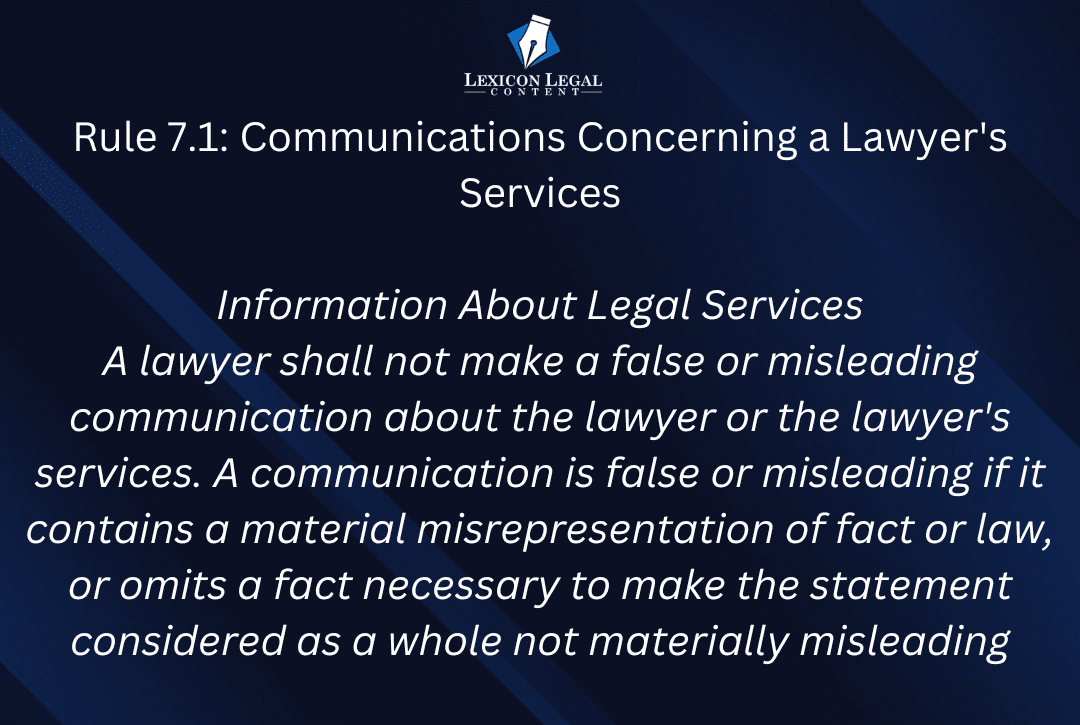
California Bar Issues Guidance for Lawyers Using AI

Generative AI, such as Open AI’s ChatGPT and Google’s Gemini (previously called “Bard”), are capable of performing tasks that were once thought solely to be in the province of human ability. It can analyze and categorize data and even create human-sounding content in the form of text. As such, generative AI has clear applications in the practice of law and legal marketing. Some of the more obvious uses include document review, contract analysis, and even handling basic client communications.

As lawyers and other professionals have started looking for ways to leverage Generative AI to do their jobs more efficiently, many observers have sounded alarm bells about ethical and professional issues about how it is used.

In fact, some of the early adopters of Generative AI in the legal profession have been subject to sanctions, as the technology is known to “hallucinate” facts. In the case of two New York lawyers, ChatGPT made up case law out of thin air and then doubled down on its existence when asked to verify the cases it cited. Ultimately, the attorneys were each fined $5,000 and ordered to reach out to the judges about the fake cases mentioned. Perhaps worse, their names were splashed all over the national media – from Forbes to CNN – for using ChatGPT and not fact-checking its output.

A year and a few months into generative AI entering the mainstream, state bars are starting to develop guidance and rules regarding how lawyers use it. Given the concerns and uncertainties regarding the use of AI in the legal profession, this guidance is particularly valuable in helping attorneys leverage the efficiency of AI while upholding ethical duties. Recently, California issued guidance that lawyers across the United States can benefit from. I discuss some of the highlights in the material below.

The California Bar Guidance

As part of its guidance, the California Bar takes the position that AI is like any other technology that attorneys may leverage in their day-to-day professional activities. From the guidance:

Like any technology, generative AI must be used in a manner that conforms to a lawyer’s professional responsibility obligations, including those set forth in the Rules of Professional Conduct and the State Bar Act.

The guidance they provide demonstrates ways that lawyers can use AI consistently with their professional responsibility obligations. Some of the obligations they address are discussed in the material below.

Duty of Confidentiality

The California Bar cautions that the use of AI can have implications related to the disclosure of confidential information. The guidance points out that many generative AI models use inputs to train the AI further and the information that users upload may be shared with third parties. In addition, the models may lack adequate security for attorneys to input confidential information.

For this reason, the Bar advises that lawyers should not input any confidential information without first confirming the model they are using has sufficient confidentiality and security protections. Furthermore, the Bar advises lawyers to consult with IT professionals 

to confirm that an AI model adheres to security protocols and also carefully review the Terms of Use or other provisions.

Duties of Competence and Diligence

The use of generative AI also can raise issues related to the duties of competence and diligence. In light of the fact that these models can produce false or misleading information, the California Bar advises that lawyers must:

  • Ensure competent use of the technology and apply diligence and prudence with respect to facts and law
  • Understand to a reasonable degree how the technology works and its limitations
  • Carefully scrutinize outputs for accuracy and bias

In addition, the Bar cautions that overreliance on AI is inconsistent with the active practice of law and application of trained judgment by an attorney. Furthermore, the guidance advises that an attorney’s professional judgment cannot be delegated to AI.

Duty to Supervise Lawyers and Non-lawyers, Responsibilities of Subordinate Lawyers

The Bar advises that supervisory and managerial attorneys should establish clear policies regarding the use of generative AI. In addition, they should make reasonable efforts to ensure that the firm adopts measures that provide reasonable assurance that its lawyers’ and non-lawyers’ conduct complies with professional obligations when using generative AI. This includes training on how to use AI and the ethical implications of using AI.

Using AI Can Also Have Implications for Law Firm Marketing

At Lexicon Legal Content, our sole focus is on generating keyword-rich content that helps law firms connect with their clients. While the California Bar’s guidance does not mention it directly, using generative AI to create marketing materials like social media or blog posts may also have implications related to the rules of professional conduct.

Under California Rule 7.1, a lawyer may not make a false statement about the lawyer or the lawyer’s services, and a statement is false or misleading if it contains a material misrepresentation of fact or law. Importantly, this is analogous to ABA Model Rule 7.1, which many states have adopted. In addition, under Model Rule 7.2, a lawyer should not call themselves a specialist or expert in any area of law unless they have been certified by an appropriate authority of the state or the District of Columbia or a U.S. Territory or that has been accredited by the American Bar Association.

These professional duties related to advertising make it critical to review any AI output a law firm intends to use in its marketing efforts. At Lexicon Legal Content, we are staffed by experienced legal professionals, including law school graduates and licensed attorneys, who understand these rules and ensure that all of the content we create – whether AI-assisted or not – is in compliance with advertising regulations in our clients’ states.

how to increase traffic to your website?

Your law firm’s website plays an important role in terms of marketing and reaching your target audience – and your content matters. Generating relevant and compelling content is the name of the game, but if you find yourself at a loss when it comes to choosing inspiring topics that resonate with your widest potential audience, you are not alone. Many firms find themselves recycling the same, tired titles time and time again, but you can do better, and we have some helpful hints to get you started. 

Think Seasonal

The seasons hit us all the same, and they make a great anchor for developing content. 

The Spring and Summer Months 

With summer nearly upon us, your content should focus on legal matters that relate to summer living, including:

  • With the kids out of school, there are summer child custody schedules to tweak, and child custody modifications are common. 
  • With warmer weather, we see more road trips, which can inspire a wealth of topics, including traffic accidents, road safety, travel routes, destinations, and much more.
  • Summer means vacay, which lends itself nicely to articles about premises liability claims related to hotels, resorts, and pools. 
  • Boats and jet skis hit their stride in the warmer months, which makes articles that explore related accidents a gimme.  

There are also the summer holidays to consider, which deserve some attention of their own. 

Memorial Day

This year, Memorial Day is on May 27, and it tends to kick off summer break for all the kiddos out there. Memorial Day is a three-day weekend that brings family and friends together for beer, brats, and yard games (or some variant thereof), and it’s a great opportunity to visit and spruce up the gravesites of our lost loved ones – with a focus on veterans. Memorial Day, however, is also closely associated with some heavy-duty traffic accident statistics, including (according to the National Safety Council, NSC) that traffic fatalities spike over the Memorial Day weekend (compared to the weekends that bracket it). In other words, you can treat Memorial Day as a springboard for a wide range of related articles. 

Fourth of July

The Fourth of July falls on a Monday this year, which – for many people – means a 4- or 5-day weekend. Fourth of July has everything that summer has to offer on tap, with some extras thrown in for good measure, including:

  • Elevated car accident statistics related to increased traffic, increased impairment behind the wheel and increased distraction
  • Water-related accidents
  • Injuries caused by fireworks

Labor Day

Labor Day means back to school and the child custody concerns that are often sparked by this transition. There are also topics about accidents on school grounds and accidents related to children making their way to and from school – including bus accidents, pedestrian accidents, and bike accidents – to consider. 

We can all relate to the Fourth of July, Memorial Day, and Labor Day – and all the other holidays – on a very personal level, which makes the summer holidays a great platform for blog topics. Don’t be afraid to give your blog entries and articles your own spin – it’s the best way to find your voice and to really speak to all those searchers who can truly benefit from your services. If you have a unique topic in mind, don’t back-burner it simply because it’s not what everyone else is doing – you might have a real winner on your hands, and when you speak from a place of authentic concern, it can have a profound impact. 

The Fall and Winter Months

As temperatures and daylight hours decrease, there’s a lot going on – and there’s plenty to keep you busy in terms of content. Consider all the following:

  • Winter driving risks
  • Holiday travel
  • Increased holiday traffic and traffic accident statistics
  • Increased impairment behind the wheel
  • Weather-related premises liability claims
  • Holiday-related stress and the accidents it causes

These basic topics are the starting point for articles that can be woven into your own masterpieces of content – that also address your potential clients’ needs. Remember, too, that a well-polished title and outline – about a subject of your choice – is going to take you farther than a rote reinterpretation of the basics. 

A Feast of Topics

If your firm focuses on personal injury, medical malpractice, workers’ compensation, or any combination of these practices, NSC has a treasure trove of potential topics on offer. Each year, they publish a Safety Observance Calendar that focuses on specific national health and safety awareness campaigns (replete with valuable resources for you to explore). For example, just a few of the many topics on tap for May and June of 2022 include:

  • May is Motorcycle Safety Month, National Bike Month, National Electric Safety Month, Trauma Awareness Month, National Water Safety Month, National Building Safety Month, and much more. 
  • May 21-27 is National Safe Boating Week.
  • June is National Safety Month.
  • June 5-11 is National Trailer Safety Week (tractor-trailers).
  • June 20 is National Ride to Work Day (focusing on those who commute to work on motorcycles and scooters). 

This is the tip of the iceberg. If you’re looking for current content ideas, NSC has got you covered.  

Keeping Your Content Fresh

In order to create quality content, you need great topics, but that – of course – is not the end of the story. The topic sets the stage, but your content has to deliver. Factors to focus on include:

  • Creating a strong outline that flows seamlessly from your introduction to a solid conclusion 
  • Allowing the reader to hear your voice 
  • Inspiring your readers to take the next step in moving from potential client to actual client

Finally, don’t shy away from revisiting older content and jazzing it up. Polishing the title, tightening the writing, updating the statistics, and including an eye-popping example or two can breathe new life into work that is down but not out.